
Moving beyond strategic communications to the deeper work of reconnecting with what we truly care about.
At Common Cause Foundation, we often say that we’re experiencing a ‘crisis of values’ – but I’ve started thinking about it as more of a war. Every day, from the moment we wake up, we’re bombarded with messages about what we should care about, what we should strive for, what makes life worth living. But these aren’t our messages. They’re not emerging from our communities, our relationships, our connection to the natural world. They’re being imposed from above, designed to serve a system that concentrates power and wealth in the hands of the few while leaving the rest of us spiritually and materially impoverished.
The word “values” has been so co-opted that many of us cringe when we hear it (me included!). We think of corporate mission statements with their meaningless word clouds confected in a marketing meeting, or government initiatives that weaponise “British Values” for divisive and racist political ends. We’ve been trained to see values as fluffy, nice-to-have add-ons rather than what they actually are: the fundamental compass that guides every decision we make, individually and collectively.
But here’s what we know in our hearts and guts, even when our heads tell us it’s “fluffy bullshit”: we’re living in a system that’s asking us to cut ourselves off from what we actually care about. Instinctively, beneath it all, we know we need each other. We know the world isn’t fair. We know there’s more to life than living paycheck to paycheck while watching genocides broadcast through our phones, while being told that we must pursue endless profit and GDP even though it doesn’t translate in any meaningful way to a ‘good life’ for the most of us (war, of course, boosts GDP). We know that we shouldn’t all be fighting over the illusion that there isn’t enough to go around on this little speck of dust suspended in a sunbeam. We have been turned against each other in every way, against our fellow living beings, and against this beautiful Earth we walk on and are an inherent part of (and it is an inherent part of us).
Understanding our ‘true north’
I’ve recently begun to think of the beginning of Robin Wall Kimmerer’s ‘Braiding Sweetgrass’ as a wonderful metaphor for values. In the opening pages Robin describes the Skywoman story shared with original peoples throughout the Great Lakes. Robin talks about this story as a “constant star in the constellation of teachings we call the Original Instructions”. “These are not ‘instructions’ like commandments, though, or rules; rather they are like a compass: they provide an orientation but not a map. The work of living is creating that map for yourself. How to follow the Original Instructions will be different for each of us and different for every era.”

IMAGE: Sky Woman, Ernest Smith, Public domain, via Wikimedia Commons

For me, this ‘compass’ describes what I see in values, even if we don’t all call them that, or even label them at all. And like any compass, it doesn’t guarantee we’ll reach our destination—we can be blown off course, distracted, or deliberately led astray. Our values don’t determine all of our behaviours, but they remain an important influence, a persistent pull toward our true north even when we’ve wandered. This ‘compass’ of our core values forms in our youth through our experiences, families, cultures, and communities, then guides us through every choice we make. I believe that we have individual compasses, and then cultural, collective ones. I believe that our individual compasses help to shape our collective compass (to some extent – although I believe that there is a lot of interference with this) and vice versa. What does it mean to grow up in a country where healthcare is free at the point of delivery? That’s a society organised, to some extent, around the value of equality, on this issue its ‘compass’ is pointed that way.
For most of us, our true north points toward intrinsic values: community, equality, meaningful relationships, connection to nature, social justice. The research backs this up*. Yet we’re immersed in systems that constantly magnetise us toward extrinsic values: wealth, power, status, image. These magnetic forces are everywhere—in advertising, in education that emphasises competition and productivity over collaboration and meaning, in media that tells us migrants are making us unsafe while politicians dismantle support systems, in an economic system that measures nothing meaningful about how we’re actually doing.
This isn’t accidental. It’s by design. Because extrinsic values get us to buy more, compete harder, work longer hours, keep the cogs turning and the profits rising. We’re being conditioned to champion values that lead to our collective demise, like turkeys voting for Christmas. At risk of overdoing the metaphor, extrinsic compass points are leading us all off a cliff.
Beyond strategic communications
I think that in the progressive movement, strategic communications has become one of the default responses to this challenge, and it’s not without value. Let me be clear about what I mean by strategic communications: the deliberate crafting of messages, narratives, and frames designed to shift specific attitudes or behaviours toward desired outcomes. This includes sophisticated approaches that work with cognitive biases and the unconscious drivers of behaviour—techniques like “nudge” theory that understand decisions aren’t purely rational.
And strategic communications practitioners do important work. They understand that much of our behaviour operates below conscious awareness. They test messages, analyse what resonates, and craft campaigns with psychological insight.
But I believe this approach isn’t sufficient for the deeper transformation we need. Strategic communications typically isolate a specific behaviour or attitude and seek to shift it, while remaining largely indifferent to why someone might be motivated to embrace that change, and are often ignorant to the campaign’s impact on the wider context—on our values compass itself.
Look at the last US election—sophisticated messaging, focus groups, targeted campaigns informed by behavioural science, yet it still failed to prevent an outcome many didn’t want (I’m not suggesting that the alternative was ideal). This isn’t because the practitioners weren’t skilled. It’s because no amount of message refinement can substitute for the deeper work of connecting with what people genuinely care about. I’ve got no science to back it up, but it feels to me that strategic communications is operating primarily in the realm of our head, and that values speak to our heart and our gut.
Strategic communications can feel instrumental, or manipulative, because they fundamentally are – finding the right lever to pull to get people to do what we want them to do, even when intentions are good. People sense this. Even the most polished piece of strategic communications can be undermined when the values underpinning it, or the integrity of the organisation or person delivering it, don’t align with the message.
Consider how we talk about trees. We might be trying to advocate for their protection. The extrinsic approach says “trees are worth £X billion to the economy.” The intrinsic approach says “trees are glorious, alive and deserving of reverence and protection.” The economic argument might win policy debates, but it reinforces the very value system that created environmental destruction in the first place. It’s possible to get the “messaging right” while getting the values completely wrong.
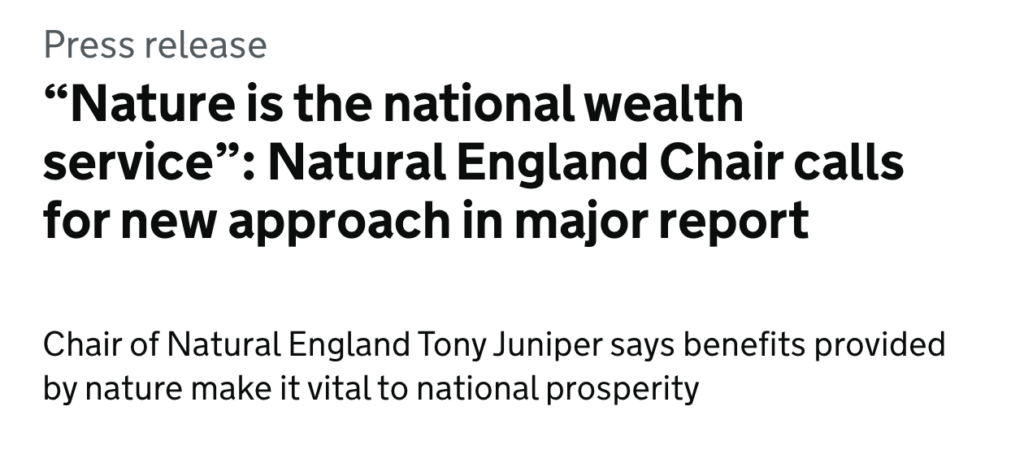
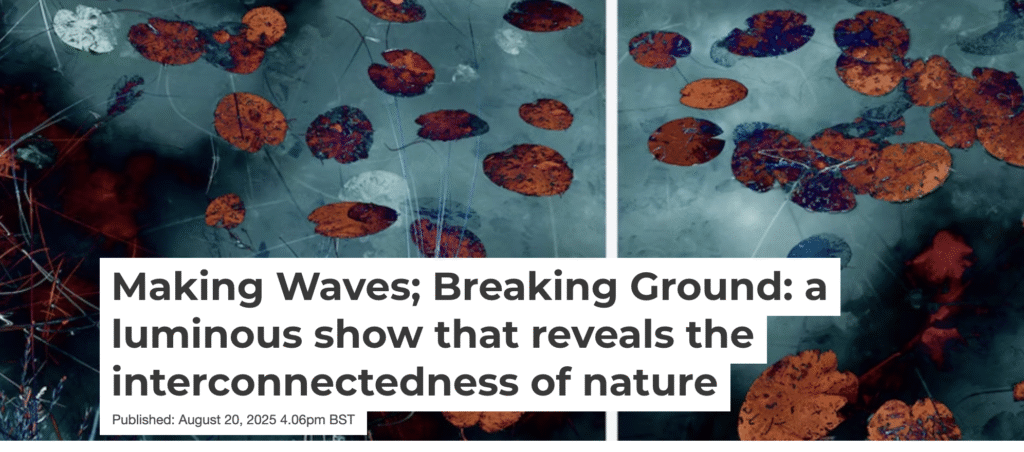
IMAGE 1: Press release from Natural England calling for nature to be recognised as ‘national wealth service (conflating the living world with the extrinsic value of wealth) & IMAGE 2: Headline from The Conversation promoting an art show that reveals the interconnectedness of nature (elevating intrinsic value of unity with nature).
What deep values work looks like
I believe values work is about head, heart, and hands integration. It’s not just what we say—it’s how we organise, what we work on, how we treat people, whether everyone is included (not assimilated), whether we pay others fairly, whether our spaces are safe, welcoming and truly inclusive (not assimilative), whether we bring people together to share their values, whether we have reverence and respect for all life, now and in the future. It’s about integrity—how people feel when they encounter us, their lived experience of us and our organisations and what we do.
When corporations try to instrumentalise intrinsic values to sell products, we feel it’s icky. Something’s off. That’s because values have to go all the way through. We can’t just put community-focussed messaging on top of an extractive business model and expect people not to notice.

IMAGE: Pepsi’s advert from 2017 which depicted celebrity Kendall Jenner joining a protest and handing a can of Pepsi to a cop to ‘defuse the tension of the moment‘. The advert received widespread criticism.
Real values work recognises that people already share intrinsic values. When it comes to our values the polarisation we see is often more perceived than real, amplified by media and social media algorithms that profit from division. We urgently need to defend against the far-right agenda, yes – but focussing on that alone means they’ve set the terms and everyone else is responding. The deeper question is how do we build and organise from our shared values? How do we open out rather than close in?
Values offer us a more nuanced, deeper way of understanding the world and what we care about, beyond words even (which is why it’s often so hard to talk about adequately!) When we talk about security, for instance, we can explore what it really means from a values perspective. Why do we value it? What does it mean to spend billions on weapons in the name of ‘security’ when people lack decent, safe homes and food? What kind of security comes from ensuring everyone has enough rather than defending scarcity? Many Indigenous communities understand that true security, rather than turning inwards, speaks to the wellbeing of the land or comes from recognising our interconnection—like trees that send signals to each other through mycelial networks, understanding we’re part of a collective, a collective that needs each other.
The strategy: reclaiming our compass
When it comes to working with values, the intention isn’t to win arguments but to create conditions where our most strongly held values can guide both individual choices and collective action. This requires several interconnected approaches:
First, telling stories. How do we help each other to understand how we got here? How our values have been instrumentalised, repressed, manipulated, and co-opted. Might we make the case for reclaiming our authentic compass, not through academic reports but through accessible content and experiences that meet people where they are? Might we help each other to understand our own values and the, often shared values of our fellow humans: stories, art, experiences, conversations in libraries, pubs, cafes, sports clubs, streets, parks and community spaces.
Showing rather than telling. I’ve said strategic communications, messaging, framing, narrative aren’t enough on their own. This work goes beyond words, taglines, adverts. It’s about real life experiences. I believe that more of our effort should be invested in ‘doing’ rather than just talking, or messaging. What does this look like? I’m not sure, but perhaps it means experimenting with events, public art, collaborations, creative projects, experiences, music, circuses, services, cafes, that don’t just talk about values but activate them. What would it look like to co-create a library of examples that show what values-based approaches actually look like in practice?
Embodying what we’re advocating for. If we believe in the power of intrinsic values, everything we do should elevate them, not just the bits we show to the world. This means getting our own house in order.
Working in places where reconnecting with our intrinsic values is most effective. Perhaps this means focusing on education and parenting for long-term culture change, but also meeting people in civic spaces where they already gather, challenging economic systems that prioritise GDP over wellbeing, and creating counter-narratives in media and entertainment. What does a consideration of values and what we know about them tell us about where and how we should be working?
Building capacity. This means supporting others to use values-based approaches, creating proactive and caring support networks that connect like-minded practitioners, and developing resources and tools that make this way of thinking accessible and actionable.
Collaborating authentically. Rather than trying to lead a movement, we ask what we can contribute to existing movements. How can we support organisations and communities that are already doing this work? How can we help them understand and articulate the values dimension of their efforts?
The deeper work ahead
This approach requires us to engage with questions that strategic communications often avoids: What do shared values mean when we disagree about how to act on them? How do we work with the reality that your idea of freedom might be different from mine? How do we build collective flourishing rather than individual success?
It also means recognising that cultural values aren’t just the sum total of individual values—there’s something more complex happening when we come together. It means working with communities that have been marginalised to understand what values mean to them, beyond Western frameworks like Schwartz’s value theory.
Most importantly, it means accepting that this isn’t quick or easy work. It’s not about finding the right message that will suddenly shift everything. It’s about the patient work of cultural change, of creating spaces where people can reconnect with what we actually care about, of building systems that honour our interconnection rather than exploit it.
The goal isn’t manipulation—it’s liberation. Liberation from the exhausting barrage of extrinsic values messages that tell us we’re not enough, that there’s not enough, that we need to compete rather than collaborate. Liberation to live according to the values we hold most dear, to create communities and systems that reflect what we actually care about.
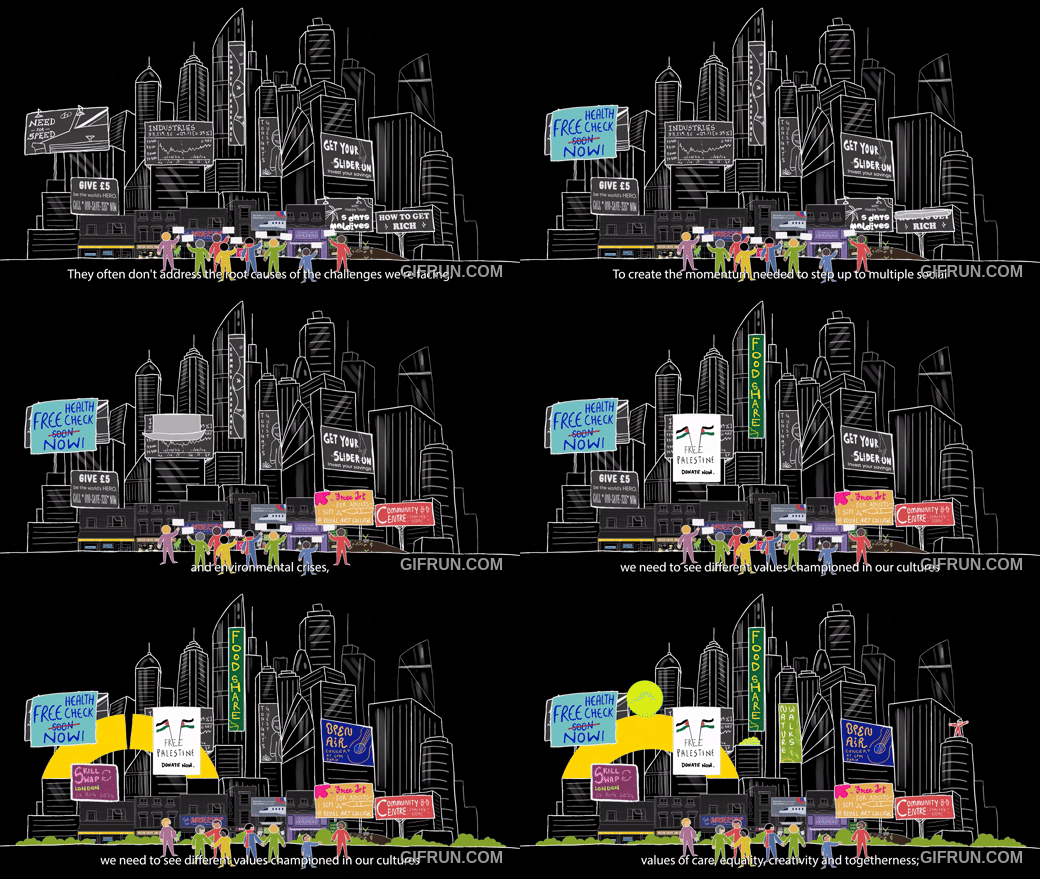
GIF: Taken from Common Cause Foundation’s animation: “The importance of cultural values for meaningful change“
This is the work of reclaiming our compass and learning to navigate by our true north. It’s the work of remembering that we’re all here together on this beautiful Earth, our home and the home of all life on Earth, and that our survival—individual and collective—depends on our ability to live according to what we know in our hearts to be true.
*With the help of Paul Hanel from the University of Essex, we examined UK data from the European Social Survey (ESS) spanning 2002–2020. The trend, though uneven, shows that UK citizens increasingly prioritise universalism and benevolence values, and—consistent with the Schwartz circumplex model of values—are de-emphasising opposing values of power and achievement.
Header image: Photo by Casey Horner on Unsplash
